So I am still on the fence regarding twitter, the tool that is taking the social networking world by storm. Perhaps my lingering reticence is a product of my low comfort level with the twitter technology. In other words, I may not know what I am doing? "Gasp!" Well that is about to end. Derek Halpern is coming to my rescue. The publisher of Prevential.com, Derek has posted the entirety of his twitter e-book on his site. Actually it is a collection of Twitter articles and resources that Derek has compiled onto one site filled with hyperlinks. Technically it isn't a traditional e-book, but it is a great Twitter resource!
How to Attract and Influence People on Twitter — The Ultimate Twitter Resource is packed with practical, technical, and over the top tips for Twitter users. I am going to find the time to read through it.
Please be sure to visit www.hardinglaw.com, the website for the law firm of Harding & Associates, for more information on California family law.
Wednesday, February 25, 2009


Tuesday, February 24, 2009
Cool Solar Charger For Your Cell Phone

Here's a neat toy. A solar charger for your cell phone. From Devotec Industries, the charger is about the size of an average cell phone, comes with power tips for Nokia old, Nokia new/N series, Sony Ericsson, Motorola/Blackberry/mini USB and Samsung phones as well as a DC 5V tip for PSPs and many digital cameras, an iPod tip, and one for female USB. At $39.99 the price is right. Several gadget head sights I have read have given it good reviews.
Click here for more
Please be sure to visit www.hardinglaw.com, the website for the law firm of Harding & Associates, for more information on California family law.
Monday, February 23, 2009
Podcast, podcast, podcast....
I am always reading blogs that sing the praises of podcasts. In my simple mind I hear "podcast," and I think of a grainy, sloppy home movie playing on my computer screen. A commercial. I don't watch them because I don't want the noise they produce disturbing other people in the office. Obviously I am missing a big boat because podcast is one of the big buzzwords in marketing these days. I must investigate further.
Source number 1, Wikipedia. Here's what my favorite internet encyclopedia says:
Next, I am going to let Robert Amrogi give us his ten podcast essntials for lawyers:
Hhhmmn. Seems I may be missing a real marketing opportunity with these podcasts? I am going to keep investigating. I will let you know what I come up with.
Please be sure to visit www.hardinglaw.com, the website for the law firm of Harding & Associates, for more information on California family law.
Source number 1, Wikipedia. Here's what my favorite internet encyclopedia says:
A podcast is a series of audio or video digital media files which are distributed over the Internet by syndicated download, through Web feeds, to portable media players and personal computers. Though the same content may also be made available by direct download or streaming, a podcast is distinguished from most other digital media formats by its ability to be syndicated, subscribed to, and downloaded automatically when new content is added. Like the term broadcast, podcast can refer either to the series of content itself or to the method by which it is syndicated; the latter is also called podcasting. The host or author of a podcast is often called a podcaster.http://en.wikipedia.org/w/index.php?title=Podcast&oldid=272733268
The term is a portmanteau of the words "iPod" and "broadcast", the Apple iPod being the brand of portable media player for which the first podcasting scripts were developed (see history of podcasting). Such scripts allow podcasts to be automatically transferred from a personal computer to a mobile device after they are downloaded.[2]
As more devices other than iPods became able to synchronize with podcast feeds, a backronym developed where podcast stood for "Personal On Demand broadCAST." though such a definition would create a misnomer, because podcasts are not available "on demand"; they are subscribed to and usually received at set intervals. Such a definition would more accurately describe a direct download or streaming media....
Podcasting's initial appeal was to allow individuals to distribute their own radio-style shows, such as Kooba Radio, but the system quickly became used in a wide variety of other ways, including re-broadcast of traditional radio and television content, distribution of school lessons,[6] official and unofficial audio tours of museums, conference meeting alerts and updates, and by police departments to distribute public safety messages.
Next, I am going to let Robert Amrogi give us his ten podcast essntials for lawyers:
Podcasts come and podcasts go – and others merely lie fallow. Inconsistency is the curse of podcasting, particularly within the legal field, where lawyers have plenty enough demands on their time without trying to squeeze in a regular broadcast.Please click here for Robert's original article.
Launched with the best of intentions, podcasts often have a short half-life. In fact, when I set out to revisit my 2005 column in which I listed 10 essential podcasts for lawyers, I discovered that five of them had disappeared or gone dormant.
Among the podcasts from my earlier list that are no longer active are Evan Schaeffer's Legal Underground Podcast, last updated in January 2007; Evan Brown's Internet Cases Podcast, last updated in February 2007; and the Supreme Court Watch Podcast (later Justice Watch), last updated in October 2007.
But for every podcast that turned off its mikes, others came along to fill the silence. As I surveyed the current crop of podcasts, I concluded that, within the legal field, podcasting remains alive and well. There are so many worthwhile programs that I had trouble winnowing my list to 10. (As you'll see, I cheated on the numbers to include more than 10 programs).
So herein is my latest set of 10 podcasts I recommend as essential for legal professionals.
1. Legal Talk Network. Here is my first opportunity to cheat – and a self-serving one at that – because LTN hosts not one podcast, but several. They include Law Technology Now, the monthly program hosted by Monica Bay, editor-in-chief of Law Technology News, and Ringler Radio, a show that explores a variety of issues related to personal-injury and tort litigation.
LTN also produces Lawyer2Lawyer, the weekly legal-affairs podcast that I co-host with California lawyer and blogger J. Craig Williams. Now in our fourth year of broadcasting, we feature guests from all over the world and all corners of the legal profession to discuss current issues in the news.
2. Podcasts at Hamline University School of Law. Now my second cheat. What started several years ago as a single podcast called Conversations in Law – a series on law, leadership and legal education – has expanded into an array of podcasts covering law and leadership, health law, public law, Native American law, dispute resolution and intellectual property. Within the Conversations series, programs range from a discussion of feminist jurisprudence to Kenneth Feinberg recalling the many personal stories he heard as administrator of the 9/11 victim compensation fund.
3. ABA podcasts. The ABA provides my third opportunity to cheat, given that its Web domain is host to a variety of podcasts. One that I particularly recommend is the ABA Litigation Podcast, a series highlighting "tips and tactics for the practicing trial lawyer." Another is the ABA CLE Podcast, a series of free CLE programs on various practical and legal issues. Finally, there is the ABA Book Briefs Podcast, which features ABA authors discussing their books and current issues related to their books.
The ABA's Web site is also home to The Digital Edge: Lawyers and Technology, a monthly podcast from two well-regarded practice-management professionals, Sharon D. Nelson, president of Sensei Enterprises, a Fairfax, Va., computer forensics and legal technology company, and Jim Calloway, author of Jim Calloway's Law Practice Tips Blog and director of the Oklahoma Bar Association's Management Assistance Program. The podcast is produced as part of the Law Technology Today e-zine of the ABA's Law Practice Management Section.
4. University of Chicago Law School podcast. This series of podcasts, produced as part of the law school's Faculty Blog, features recordings of lectures and other programs at the school. In one recent episode, legal scholar Adam Samaha discusses the Second Amendment and the Supreme Court's decision in District of Columbia v. Heller. In another, law professors Cass Sunstein and Richard Epstein debate whether conservative voters should support Barack Obama.
5. Law and Disorder. This is produced as both an independent radio program and podcast. With four left-leaning lawyers as its hosts, the show examines issues surrounding civil liberties, privacy and politics. The show is professionally produced and features a range of guests and topics. Recent topics included arrests of protesters during the Republican National Convention in St. Paul, Minn., trials at Guantanamo and new FBI guidelines for investigating terrorism.
6. Out-Law. The U.K. law firm Pinsent Masons produces this weekly 10-minute podcast on topics relating to Internet and intellectual property law. The podcast is part of the firm's award-winning Out-Law.com Web site which provides a variety of guides, articles and news stories about the law. Recent episodes of the podcast examined whether database law is bad for business and whether patents and copyrights make innovation impossible.
7. This Week in Law. Don't let the name mislead you into thinking this is a weekly program – a new episode is posted every month or so. Host Denise Howell, a California lawyer and longtime blogger, tackles cutting-edge issues at the intersection of law and technology. Think of it as the McLaughlin Group for cyberlaw. Each show includes a panel of guests – some regulars and some not – who weigh in on such topics as cyber-bullying, cloud computing, blogger liability and domain-name law.
8. Hearsay Culture. This is another show produced both as a podcast and for radio – Stanford University's KZSU-FM. Recorded in cooperation with Stanford's Center for Internet and Society, the show is hosted by Dave Levine, an assistant professor at Charlotte School of Law. Each 50-55 minute program covers issues of law and technology, but not, as the show's Web site says, "from a purely law or geek perspective."
9. International Dispute Negotiation. From the International Institute for Conflict Prevention & Resolution, this series of podcasts – more than 40 episodes as of this writing – focuses on timely and practical topics in dispute resolution, with an emphasis on cross-border commercial conflicts. Among the topics the program has covered are mediating with hard negotiators, detecting lies and concealing emotions, and dealing with arbitrator bias.
10. New Jersey Law Blog. The law firm Stark & Stark offers weekly legal updates in podcast form as part of its blog about New Jersey law. Podcasts feature lawyers from various practices in the firm discussing recent developments in New Jersey and federal law. Although these podcasts are directed more at consumers than other lawyers, I include them here in part because they demonstrate how effectively a law firm can use podcasting as part of its overall marketing and positioning strategy.
With this list as a start, load up your MP3 player (or listen on your computer) and start to explore the world of legal podcasting.
Hhhmmn. Seems I may be missing a real marketing opportunity with these podcasts? I am going to keep investigating. I will let you know what I come up with.
Please be sure to visit www.hardinglaw.com, the website for the law firm of Harding & Associates, for more information on California family law.
Carolyn Fights Back!
Although I have never met her, I am a big fan of Carolyn Elefant. I have been reading her MyShingle.com for years, and have always been impressed by her commitment to the practice of law, and to us lawyers. So, it caught my attention when I saw Carolyn feeling a need to defend herself this week. Seems there is a bit of hostile commenting going around. In particular Carolyn is put out by an anonymous poster on her site questioning her ethics. Is Carolyn worked up? You betcha. Am I questioning her character? Nope. In fact, to show my support, I am giving Carolyn another forum to vent. Here's what she has to say:
Please be sure to visit www.hardinglaw.com, the website for the law firm of Harding & Associates, for more information on California family law.
In response to my post on The DC Bar and Avvo, I received a comment from DC Attorney that angered me enough to write this post. Specifically, DC Attorney attacked my integrity, and the integrity of this site with the following remark:Please click here to read Carolyn's original post.
Regardless, since it's obvious Carolyn and Josh King have a financial stake in Avvo's promotion, it's not really worth the time to bother with either.
Let me be clear: I do not have any financial stake in Avvo whatsoever. I have a listing at the site, but given my highly specialized practice area, I don't generate clients from my listing nor do I ever expect to. I've previously defended Avvo, however, there, my remarks came in response to the dismissal of a class action against Avvo. And in my most recent post, my focus was more on the DC Bar's reaction to the site, rather than a promotion for the Avvo itself.
Look, DC Attorney - if you don't agree with my position on Avvo, just say so - and preferably, identify yourself when you do. But don't you dare attack my integrity. I realize that it's hard to believe that a little site like mine can offer so much content without financial support from outside sources, but yes it's true. Because MyShingle has always been, at least in part, a labor love and posting here, even over six years has never felt like work.
Above all, though, I value, and stand proud of my integrity particularly in a place like the blogosphere where many others are quick to cash in on fame and change their position once cash starts flowing. So I want to make clear that at least here, my readers can trust that I am fully transparent, as I have been for six years. If I ever recommend or post favorably about a product or a company, I will always disclose my affiliation and whether I'm getting a financial benefit (in fact, in this post where I recommended Blawging Lawyers, I noted that Grant Griffiths was a friend. What I didn't say is that Grant has offered me affiliate opportunities which I declined). And even where I do have paying sponsors (such as the law.com affiliation and Nolo), I am always clear that I retain full control over my site content and my sponsors respect that. In fact, I choose sponsors carefully, and I'm only interested in those who appreciate my mission: to improve the image of solos and equip them with encouragement to succeed and to serve as an honest broker.
As some of you may know, I am currently working on a build out of MyShingle, and I will, in a measured way, be taking on sponsors and adding features to help the site generate revenue so that I can continue to provide features like Bars Reviewed. But no matter what I do, I will always be transparent with readers.
As for DC Attorney, I'd have been happy to take this offlist with him, but he cloaked his email. How ironic that someone who thought to attack my integrity didn't even have the integrity to identify himself.
Please be sure to visit www.hardinglaw.com, the website for the law firm of Harding & Associates, for more information on California family law.
Friday, February 20, 2009
Security flaw in Acrobat
Thanks to Ernest Svenson for bringing to my attention a security flaw in Acrobat. Acrobat and Acrobat Reader (all versions since version 7) are vulnerable to a Javascript exploit that can crash Acrobat.
Adobe is planning to release updates to Adobe Reader and Acrobat to resolve the security issue. It expects to update Adobe Reader 9 and Acrobat 9 by March 11th, 2009. Updates for prior versions of Adobe Reader and Acrobat will follow soon after.
If you're worried about this exploit right now you should turn off Javascript support in the preferences settings.
Click here for Ernie's message.
Please be sure to visit www.hardinglaw.com, the website for the law firm of Harding & Associates, for more information on California family law.
Wednesday, February 18, 2009
Blogging For Business
Michelle Lore at minnesotalawyer.com writes about the value of blogging as a marketing tool.
Please be sure to visit www.hardinglaw.com, the website for the law firm of Harding & Associates, for more information on California family law.
You’re a busy lawyer. You’ve got a deposition this morning, a client meeting this afternoon and a legal brief due tomorrow. Is it really worth it then to spend time nearly every day in front of a computer adding posts to a law blog that you’re not sure people will even read?Please click here for the rest of the article.
For Minneapolis consumer law attorney Samuel Glover, the answer is a resounding yes — as long as you do it well, that is. Over the 3 ½ years he’s been blogging, the techno-savvy lawyer has retained dozens of clients who have found him through his law specialty blogs — caveatemptorblog.com (a blog concentrating on consumer rights) and lawyerist.com (a blog concentrating on law-practice management, which he co-authors with Minneapolis attorney Eric Cooperstein). Combined, the blogs get around 14,000 visits a month.
“That makes me have a bigger network of people than just about 99 percent of the law firms out there,” he said.
Brendan Flaherty, an attorney with Pritzker Olsen in Minneapolis, agreed that blogging is worth the time and effort that goes into it. He said his firm’s blog — The Food Poisoning Law Blog — has been a simple, economical way to get information out to the public and get the public in the door.
Breeding business
Blogging lawyers are convinced that their blogs generate business, but acknowledge that it can be difficult to measure exactly how much. Some clients come in directly as a result of reading the blog, while others come in after a recommendation from an attorney who reads their blog.
“I get referrals and clients directly from it,” said Hopkins attorney Gregory Reigel, who links to his aviation-related blog from his law firm website. “I can’t quantify how much business I get out of it, but I definitely get some from it.”
“As compared to other marketing sources, it’s the cheapest thing you can do. That’s what is so great about it,” said Flaherty.
Please be sure to visit www.hardinglaw.com, the website for the law firm of Harding & Associates, for more information on California family law.
Tuesday, February 17, 2009
Don't Dilute Your Niche In a Down Economy
A few years ago I made the jump to a niche practice, and became a family law specialist. It was scary, but ended up being the best business decision I have ever made. Now things are humming along. For others, the path may not be as shiny. The economy is down, and revenue streams are drying up. In these trying times Tom Kane provides sage advice to specialists.
Please be sure to visit www.hardinglaw.com, the website for the law firm of Harding & Associates, for more information on California family law.
It is very tempting to take whatever legal business comes over the transom in a down economy. Heck, if the firm’s normal business is slow, some lawyers might be tempted to take whatever work comes along. Wrong!Click here for the rest of this very important article.
It is the worst time to start diluting your brand. Better to crank up the marketing to get more visibility in the industry or practice area you are known for. Otherwise, it will take longer and cost more to restore your niche when things start turning around.
Please be sure to visit www.hardinglaw.com, the website for the law firm of Harding & Associates, for more information on California family law.
Subscribe to:
Posts (Atom)
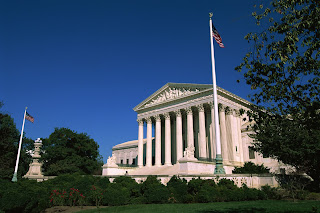
Solo nets Supreme Court win!
I know this has nothing to do with technology, but I think it is pretty cool. Andrew Simpson is a sole practitioner in the U.S. Virgin Is...
-
 One of my favorites shows to watch on television as a kid was Hogan's Heros . My how it amused me as time and again the misfit prisoners...
 -
We have used Amicus Attorney for years. I have always loved the awesome graphics of the program, and the potential it carries. I have alwa...
-
 Think of traditional law firm letterhead... Black on white. Solid blocks of text. Engraved printing. Rich, traditional, and strong. Not...